Scientific Harness
An execution and modification substrate that orchestrates tools, workflows, compute, memory, and verification—and constructs new task-specific capabilities on demand.
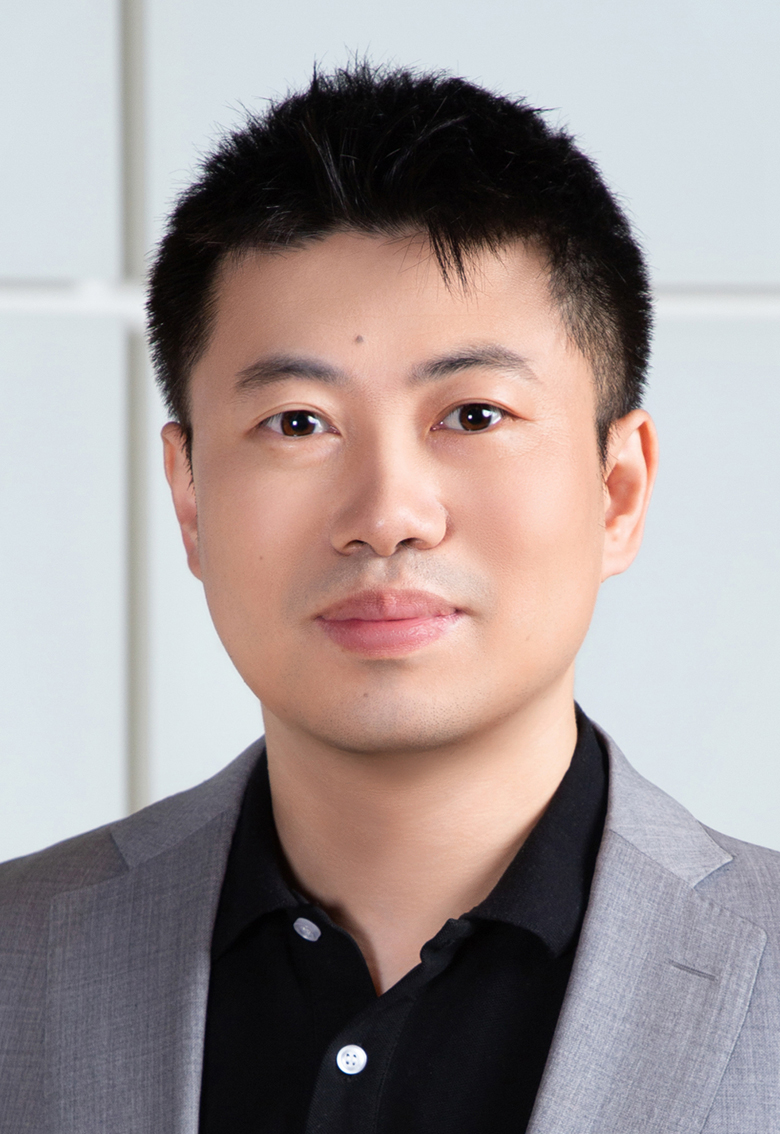
夏应策 / Yingce Xia, Ph.D.
Associate Professor at Zhongguancun Academy, Adjunct Ph.D. Supervisor at the University of Science and Technology of China (USTC), and former Principal Research Manager at Microsoft Research. His research vision is Agentic Science: building verifiable, self-improving AI systems for scientific discovery, and using the scientific method—hypothesis, experimentation, and verification—to improve AI itself.
Research Vision
My research vision is to build verifiable, self-evolving systems for scientific discovery. Scientific agents should do more than generate candidates or operate a fixed set of tools: they should plan and execute long-horizon research, learn from trajectories, failures, experimental outcomes, and expert feedback, and improve the models, tools, evaluators, memory, and decision processes that make up the discovery system itself. I ground this work in drug discovery, protein design, and medicine and healthcare, where computational, experimental, and real-world feedback can drive continuous system improvement. The long-term goal is twofold: to use AI to advance science, and to use the methods of science—hypothesis formation, experimentation, verification, and cumulative evidence—to advance AI itself.
An execution and modification substrate that orchestrates tools, workflows, compute, memory, and verification—and constructs new task-specific capabilities on demand.
Learning from scientific traces, execution failures, expert corrections, and verified outcomes to improve planning, tool use, recovery, and efficiency.
Extending NatureLM toward evidence-grounded reasoning across text, sequences, structures, and other scientific modalities, with an emphasis on mechanism inference and testable hypotheses.
A verified self-evolution loop that diagnoses bottlenecks, modifies models, tools, evaluators, memory, or workflows, and retains only improvements that generalize.
Experience
On duty for the AI + Education direction.
Led research programs in generative AI, AI for Science, drug discovery, and NLP.
Supervisors: Prof. Tie-Yan Liu and Prof. Nenghai Yu.
Microsoft Research Asia PhD Fellowship, 2016.
Research topics: dual learning and machine translation.
Thesis: A Theoretical and Empirical Study of Dual Learning.
School of Information Science and Technology.
Research Contributions
See the full publication list or visit Google Scholar.
Highlights
Community